Overview
One of the best SOC/Engineering exercises I've done: a 3-day weekend project.
I built a Dockerized SOC simulation lab with four distinct components, all spun up
with a single command: docker compose up.
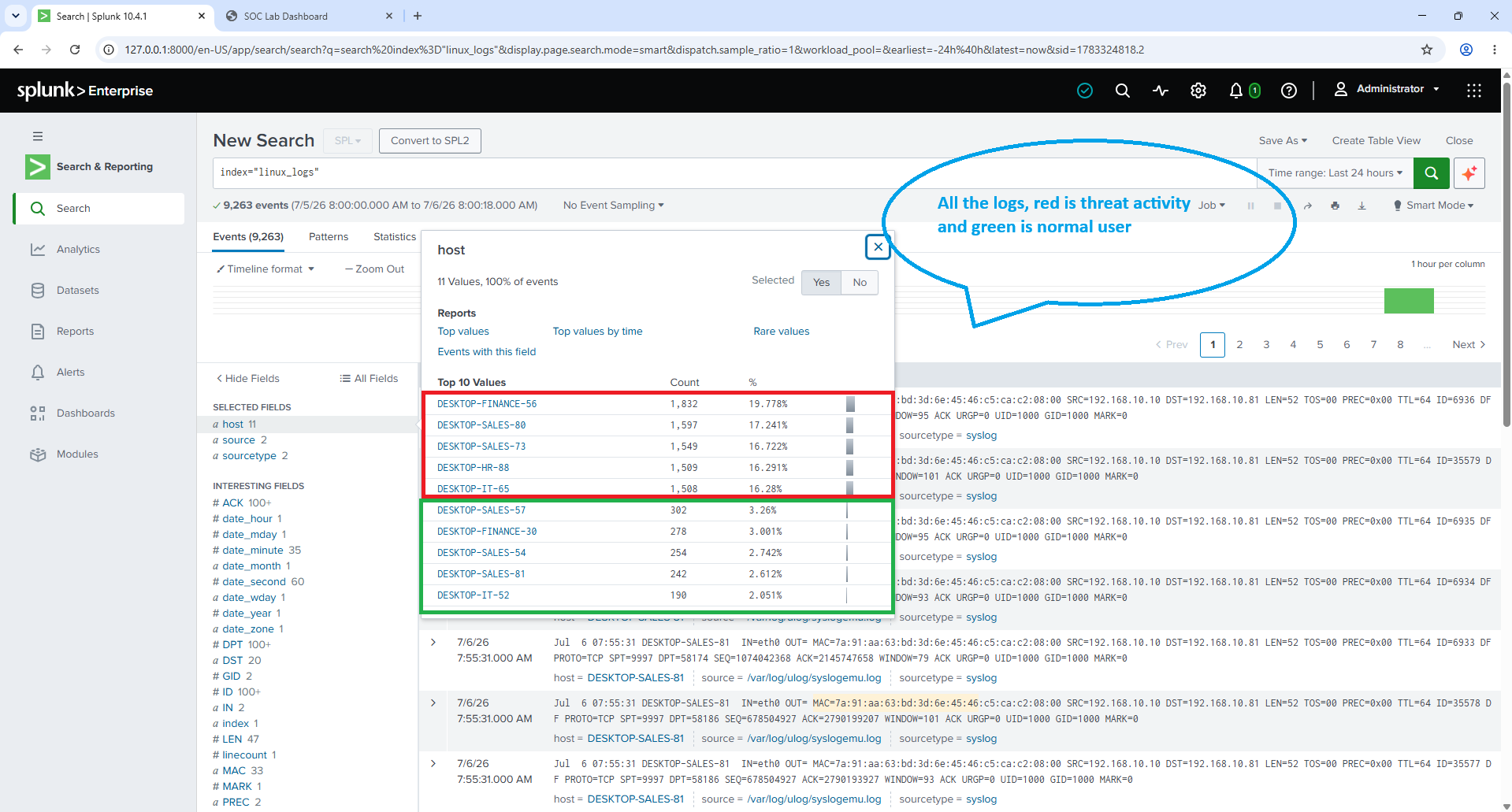
After that, the focus shifts entirely to analysis in Splunk — queries, detections, and event correlation. Because each simulation generates unique telemetry with new IPs, hostnames, usernames, and randomized behavior, no two runs are the same.
Project Demo
Lab Architecture — 4 Components
The lab is composed of four isolated containers, each on a dedicated subnet, mimicking a realistic segmented corporate network:
- Splunk Server — Network:
192.168.1.0/24 - Orchestrator — Networks:
192.168.1.0/24,192.168.10.0/24,192.168.100.0/24 - Corporate Workstation — Network:
192.168.10.0/24 - Actor System — Network:
192.168.100.0/24
Engine Lifecycle
Splunk Server
Configured via a customized deployment server. Universal Forwarders dynamically connect and pull centralized configuration patterns automatically upon container spin-up — no manual configuration required after initial setup.
Orchestrator
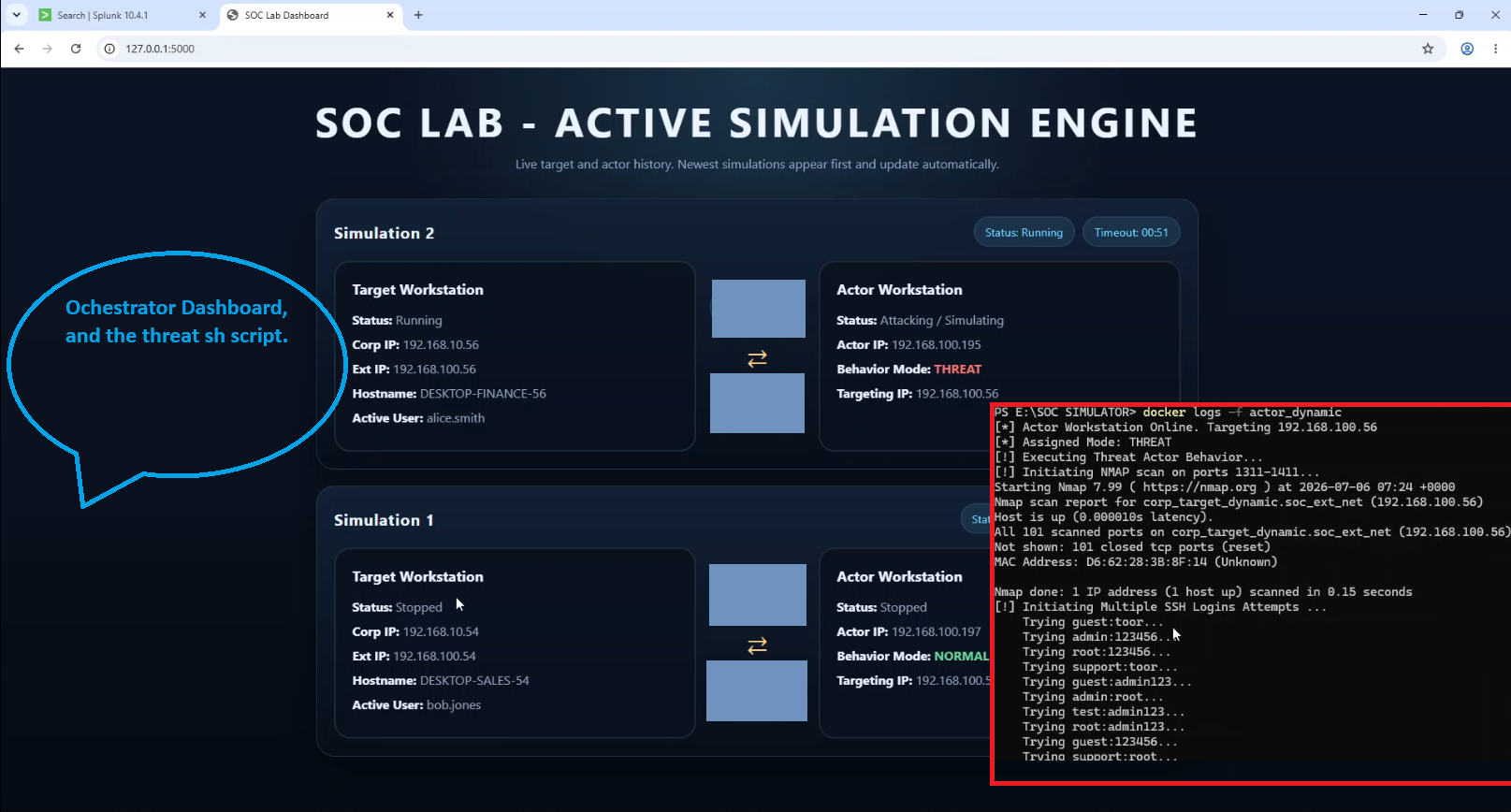
The brain of the engine. It manages three distinct subnets, handles dynamic IP allocations, and injects randomized hostnames and usernames for both the Corporate Workstation and the Actor System. It powers a dashboard displaying:
- Active and historical session pairings
- Actor-to-target mappings
- Live round timers
Corporate Workstation
Tracks real-time telemetry. Features a preinstalled Universal Forwarder capturing:
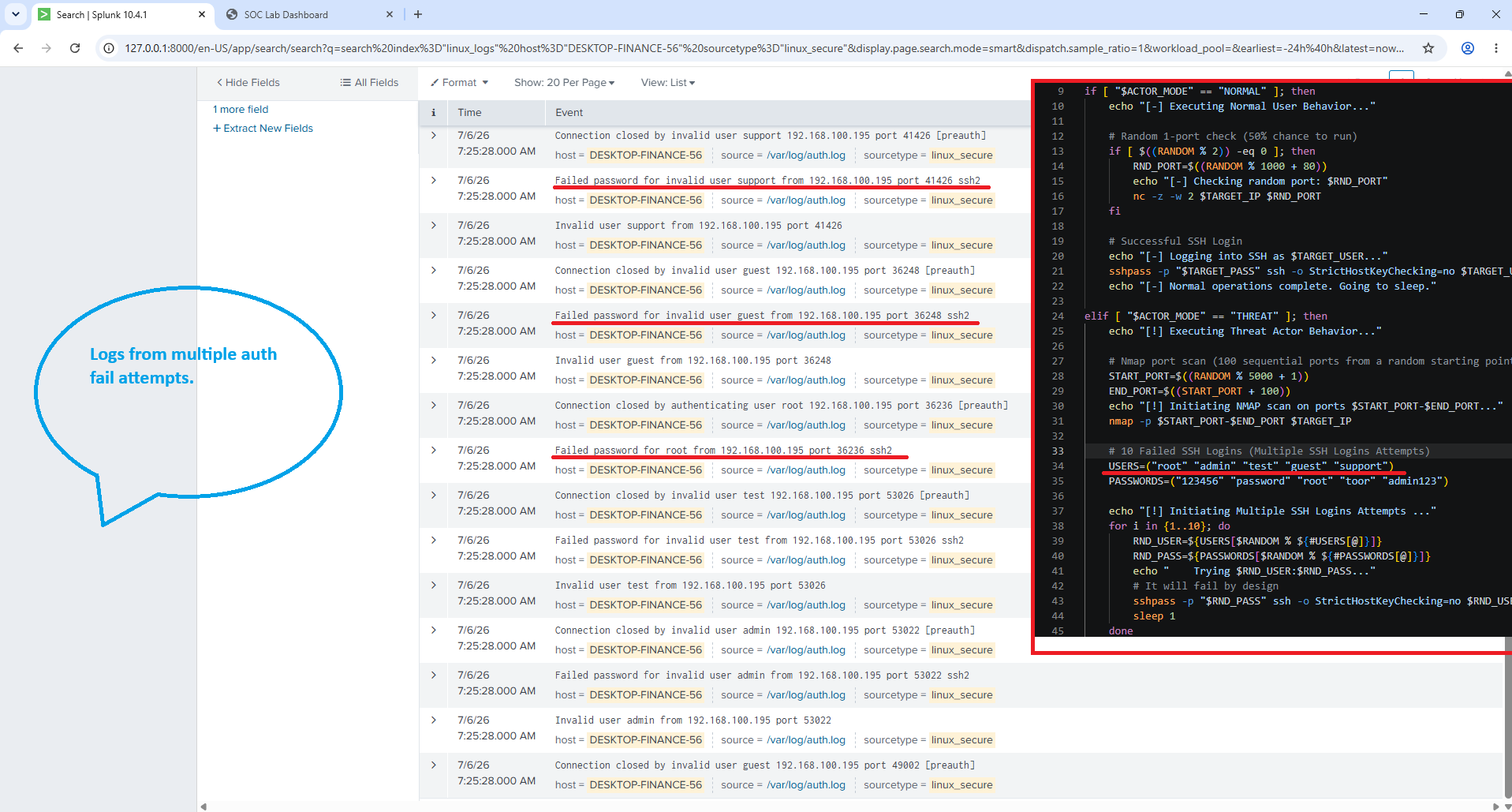
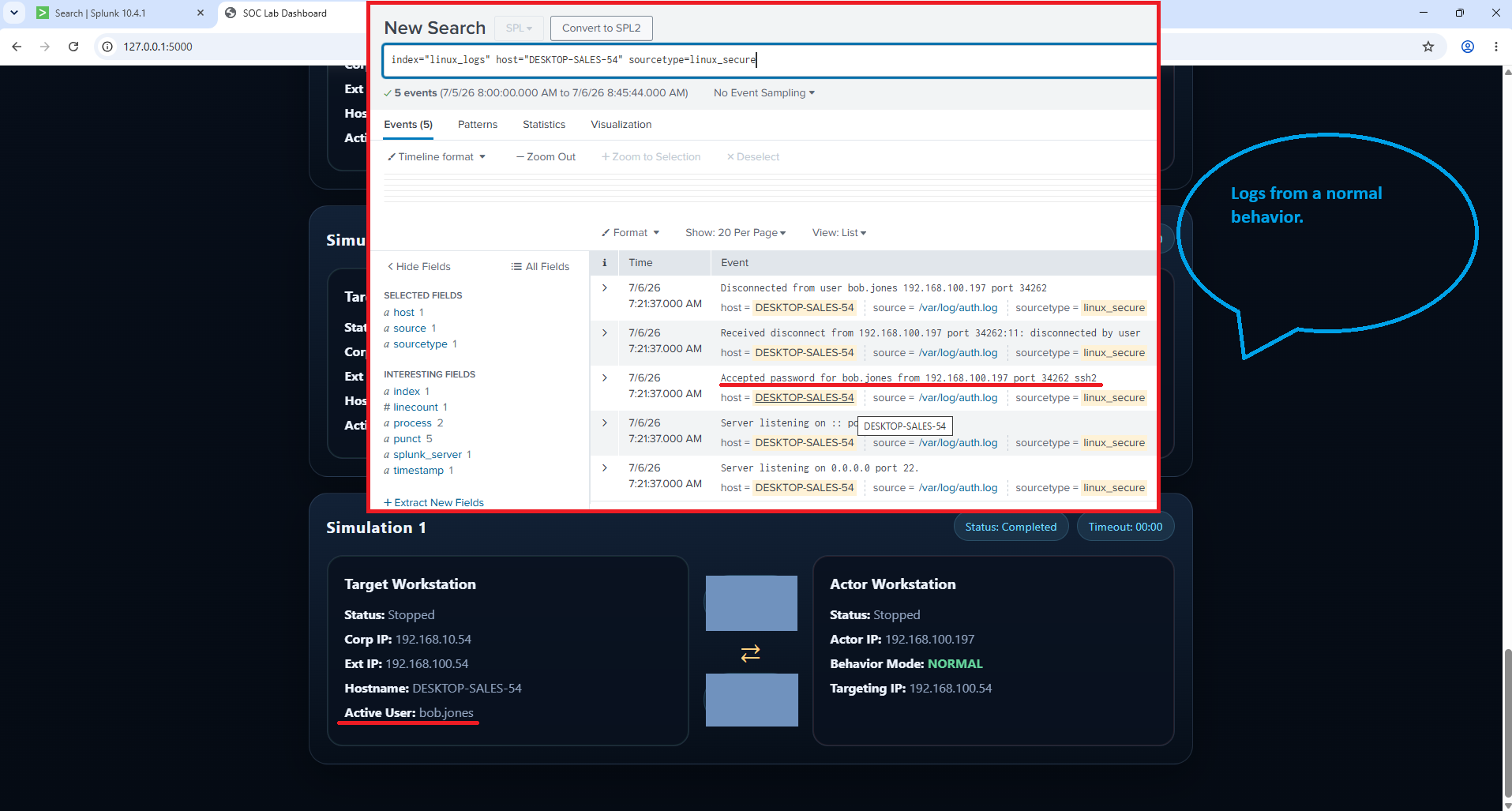
- SSH auth logs — successful and failed authentication events
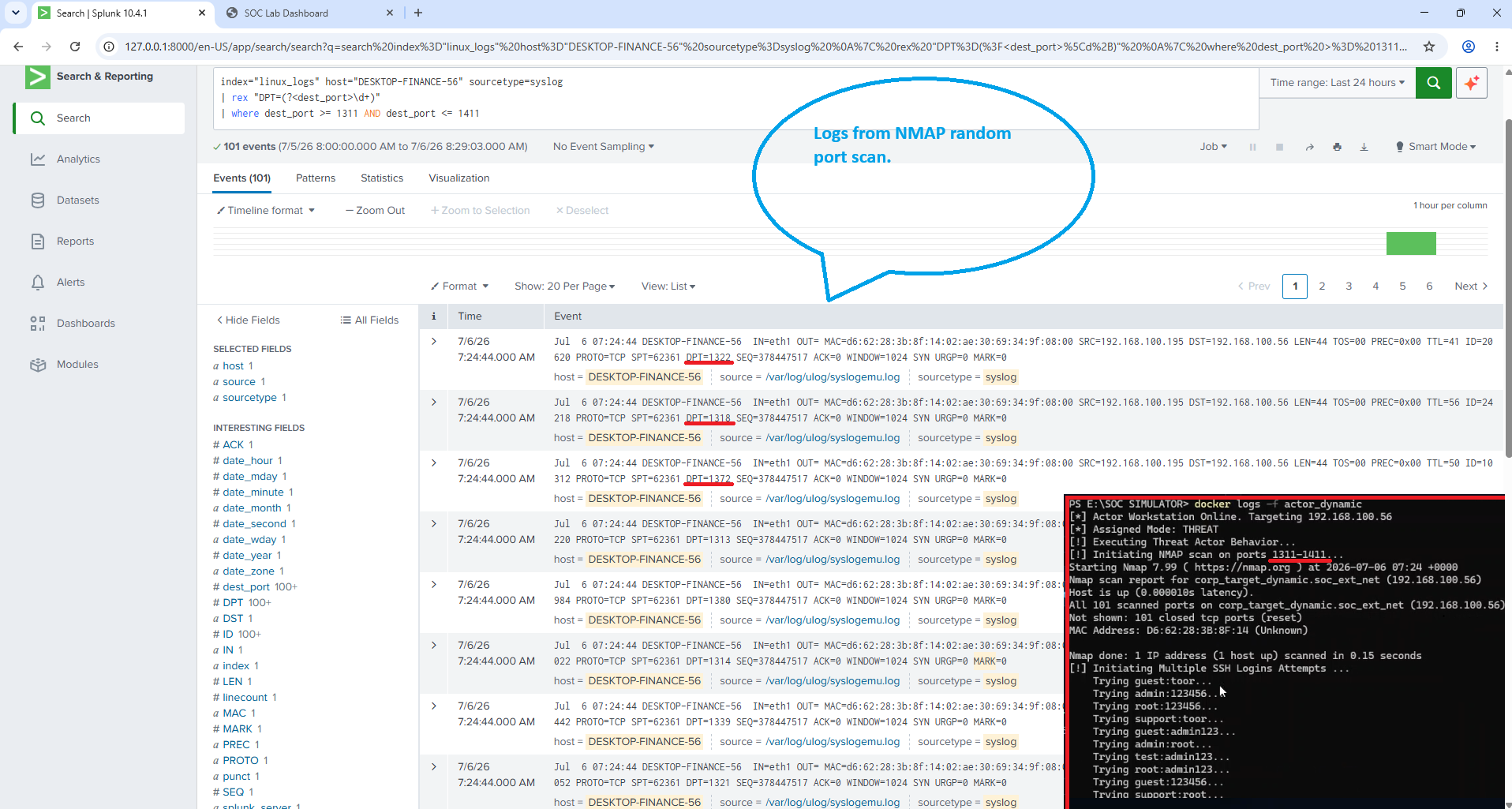
- iptables firewall events — inbound connection attempts and port scans
Actor System
Randomly selects one of two behavior profiles at startup, making each simulation round unique and unpredictable:
- ✅ Normal Behavior (50%): Simulates a user mistake by testing one random port, then performs a successful SSH login using valid credentials generated by the Orchestrator.
- ⚠️ Threat Behavior (50%): Runs an Nmap scan against the Corporate Workstation (100 random ports), then performs 10 SSH attempts with random credentials to simulate brute-force activity.
Splunk Analysis
With the lab generating unique telemetry on every run, the analysis phase in Splunk focuses on:
- Writing SPL queries to detect brute-force SSH attempts
- Correlating iptables firewall events with authentication logs
- Identifying Nmap port scan signatures in network telemetry
- Building detections that hold up across different IPs, hostnames, and usernames
Ethical Disclaimer
This project was built and executed entirely within an isolated, local virtual home lab environment strictly for educational and defensive detection engineering purposes. All simulated attack activity was confined to containers with no external network connectivity.